
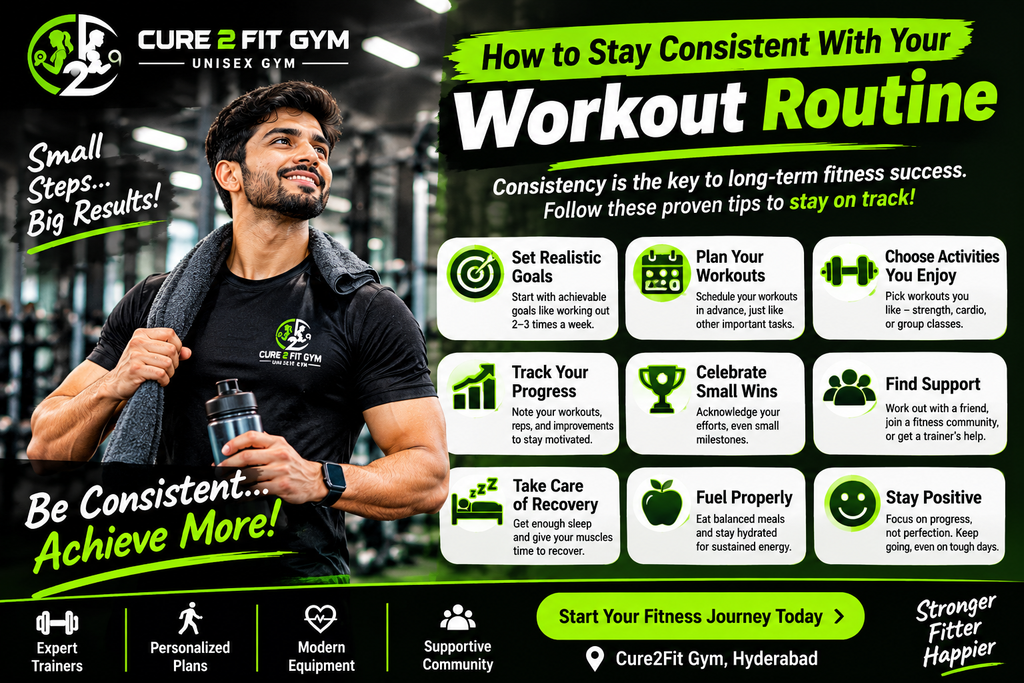
Starting a workout routine is exciting, but staying consistent can be challenging. Busy schedules, work pressure, low motivation, tiredness, and slow results can make it difficult to continue exercising regularly.
Many people begin their fitness journey with big goals but struggle to maintain the habit over time.
The secret is not working out harder every day. It is building a realistic routine that fits your lifestyle and making small improvements consistently.
In this guide, Cure2Fit Gym shares 10 practical tips to help you stay consistent with your workout routine and make fitness a regular part of your life.
1. Set Realistic Fitness Goals
One of the biggest reasons people lose consistency is setting goals that are too difficult to maintain.
Instead of planning to exercise every day from the beginning, start with achievable targets.
For example:
- Exercise three days a week.
- Walk for 20 minutes on non-gym days.
- Improve your strength gradually.
- Follow a regular sleep schedule.
- Build a healthy eating routine.
Once these habits become comfortable, you can gradually increase your activity.
2. Create a Workout Schedule
Treat your workout like an important appointment. Choose specific days and times that fit your daily routine.
For example:
| Day | Workout |
| Monday | Full-body strength training |
| Tuesday | Walking or cardio |
| Wednesday | Rest or light activity |
| Thursday | Strength training |
| Friday | Walking or cycling |
| Saturday | Full-body workout or favourite activity |
| Sunday | Rest and recovery |
You do not need to follow this exact schedule. Choose a plan that works with your work, family, and personal commitments.
3. Start Small and Build Gradually
You do not need long workouts to establish consistency.
If you are a beginner or returning after a break, start with shorter sessions. Even a 15–20-minute workout can help you build the habit.
Try:
- Short walking sessions.
- Basic body-weight exercises.
- Light resistance training.
- Gentle mobility exercises.
As your fitness improves, gradually increase your workout duration or intensity.
4. Choose Workouts You Enjoy
If you dislike your workout routine, staying consistent becomes harder.
Explore different activities until you find something you enjoy.
Some options include:
- Weight training.
- Zumba and dance fitness.
- Yoga.
- Cycling.
- Swimming.
- Walking and jogging.
- Functional training.
- Group fitness classes.
Enjoyment makes exercise easier to maintain over the long term.
5. Track Your Fitness Progress
Tracking your progress helps you recognize improvements that may not be obvious every day.
You can record:
- Workout days completed.
- Exercise sets and repetitions.
- Weights lifted.
- Walking duration or distance.
- Energy levels.
- Strength improvements.
- Body measurements, if relevant to your goals.
Do not measure success only through body weight. Improvements in strength, stamina, mobility, and daily energy also matter.
6. Find a Workout Partner or Trainer
Having someone support your fitness journey can help you stay accountable.
A workout partner can encourage you to attend scheduled sessions, while a qualified trainer can help you follow a structured plan and learn correct exercise techniques.
Group fitness classes can also provide a motivating environment where you exercise alongside others.
Choose the type of support that makes you feel comfortable and encouraged.
7. Don’t Depend Only on Motivation
Motivation naturally changes from day to day. Some days you may feel excited to exercise, while other days you may feel tired or distracted.
Instead of waiting for motivation, build a routine.
Helpful habits include:
- Prepare your gym clothes in advance.
- Pack your gym bag the night before.
- Schedule workouts in your calendar.
- Set reminders.
- Choose a fixed workout time.
- Keep a simple workout plan ready.
Making exercise easier to start can help you follow through.
8. Allow Time for Rest and Recovery
Consistency does not mean exercising intensely every day.
Your body needs recovery after challenging workouts. Without enough rest, you may experience excessive fatigue, persistent soreness, or reduced performance.
Make recovery part of your fitness plan:
- Get sufficient sleep.
- Include rest days.
- Drink enough water.
- Eat balanced meals.
- Adjust training intensity when needed.
A sustainable routine balances exercise with recovery.
9. Don’t Give Up After Missing a Workout
Missing one workout does not mean your fitness journey has failed.
Unexpected work, travel, family responsibilities, or illness can interrupt your schedule.
The important thing is to return to your routine when you are ready.
Follow these simple steps:
- Avoid feeling guilty about missing a session.
- Identify what interrupted your schedule.
- Adjust your plan if necessary.
- Restart with your next planned workout.
- Focus on consistency over perfection.
Remember: One missed workout does not erase your progress.
10. Celebrate Small Achievements
Fitness progress happens gradually. Recognizing small improvements can help you stay encouraged.
Celebrate achievements such as:
- Completing your first full week of workouts.
- Improving your exercise technique.
- Increasing your walking time.
- Completing more repetitions.
- Attending the gym consistently for a month.
- Feeling stronger during everyday activities.
Focus on the positive changes you are making rather than expecting immediate transformation.
A Simple 4-Week Workout Consistency Challenge
Use this beginner-friendly challenge to develop a regular exercise habit.
| Week | Your target |
| Week 1 | Complete 2 manageable workouts |
| Week 2 | Complete 2–3 workouts |
| Week 3 | Follow a planned weekly schedule |
| Week 4 | Review your progress and maintain your routine |
Adjust the challenge to your current fitness level, health, and recovery. If you are new to exercise, begin with shorter and easier sessions.
Common Reasons People Struggle With Workout Consistency
| Challenge | Practical solution |
| Busy schedule | Plan shorter workouts |
| Low motivation | Follow a fixed routine |
| Slow results | Track different types of progress |
| Workout boredom | Try different activities |
| Excessive soreness | Adjust intensity and recovery |
| Lack of guidance | Consult a qualified trainer |
| Missed sessions | Restart without guilt |
Frequently Asked Questions
How can I stay motivated to work out every day?
You do not need to work out intensely every day. Set realistic goals, schedule exercise, choose activities you enjoy, and track your progress. Make room for rest and recovery.
How many days a week should I exercise?
Two or three planned workout sessions can be a manageable starting point for many beginners. Gradually build towards recommended activity levels based on your fitness, health, and schedule.
What should I do if I miss a workout?
Do not try to compensate with an excessively difficult session. Simply return to your regular schedule when possible.
How long does it take to build a workout habit?
There is no fixed timeline. It depends on your routine, environment, motivation, and individual circumstances. Focus on repeating manageable actions rather than expecting a habit to form by a specific date.
Is working out with a trainer helpful for consistency?
A qualified trainer can provide structure, exercise guidance, and accountability. This can be particularly helpful if you are a beginner or unsure how to plan your workouts.
Can I stay fit with short workouts?
Yes. Short workouts can contribute to your overall physical activity. Their benefits depend on the exercises, intensity, frequency, and your overall activity throughout the week.
Final Thoughts
Staying consistent with your workout routine is about creating habits that fit your lifestyle.
Set realistic goals, plan your workouts, choose activities you enjoy, track your progress, and allow enough time for recovery.
You do not have to be perfect. You just need to keep moving forward, one workout at a time.
Ready to make fitness a regular habit?
Join Cure2Fit Gym and explore training options that can help you stay active, build strength, and work towards your fitness goals.
Health note: This article provides general fitness information and is not a substitute for individualized medical advice. Adjust exercise to your ability and seek professional guidance if you have a medical condition, injury, or symptoms that affect physical activity.